The trap system at a glance
Malignus lets you wire traps to triggers. The Steam description names dart throwers, spinning blades, flamethrowers, gas, electric coils and webs as trap families, and pressure plates, tripwires, sensors, levers and timers as trigger types. The official build menu adds more.
10
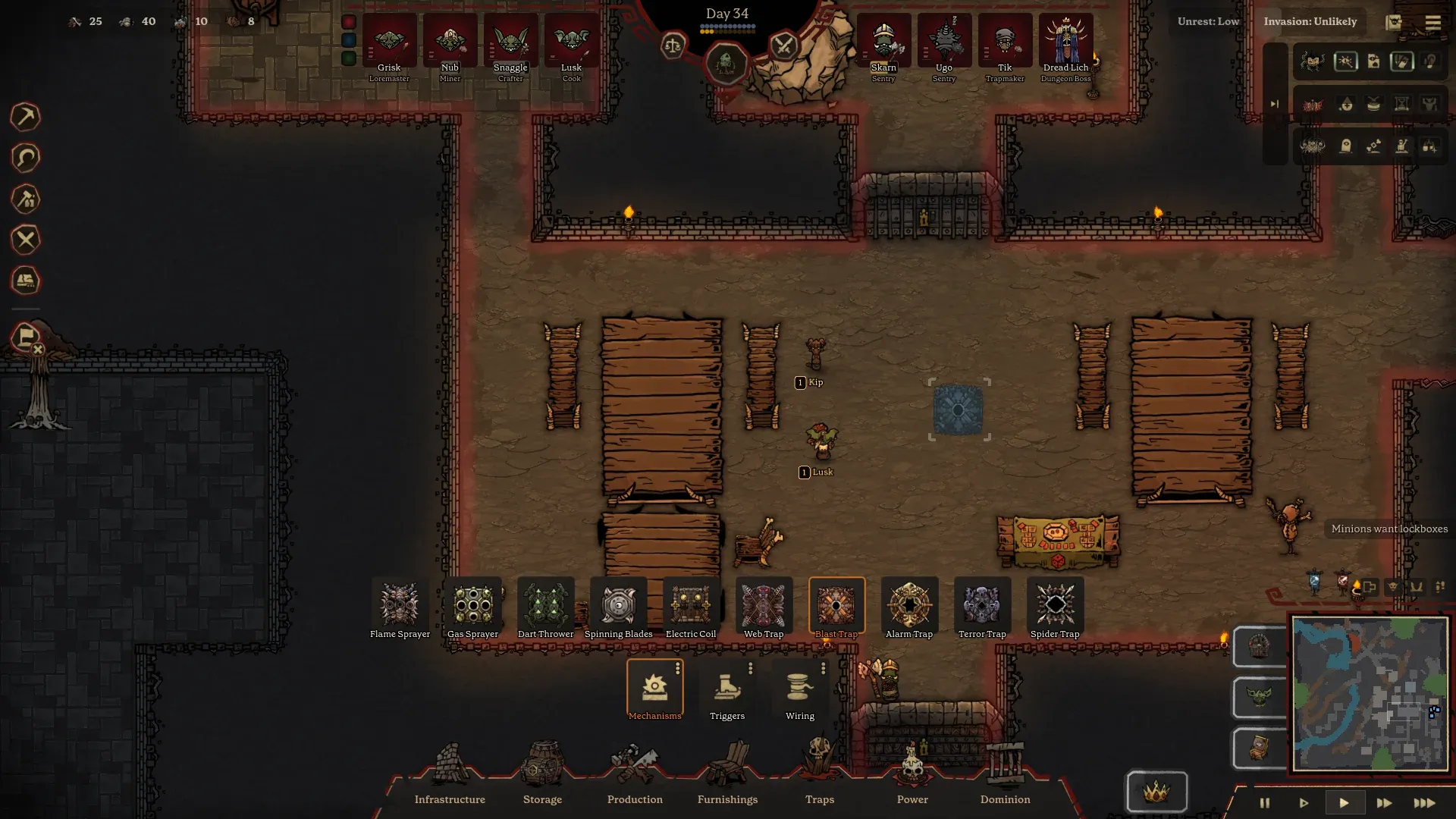
Trap icons in the build menu
5
Published trigger types
3
Build tabs: Mechanisms, Triggers, Wiring
Confirmed and unknown
Confirmed
- Traps are built from a dedicated Traps category with Mechanisms, Triggers and Wiring tabs.
- Ten trap mechanisms appear in the official build menu.
- Pressure plates, tripwires, sensors, levers and timers are named trigger types.
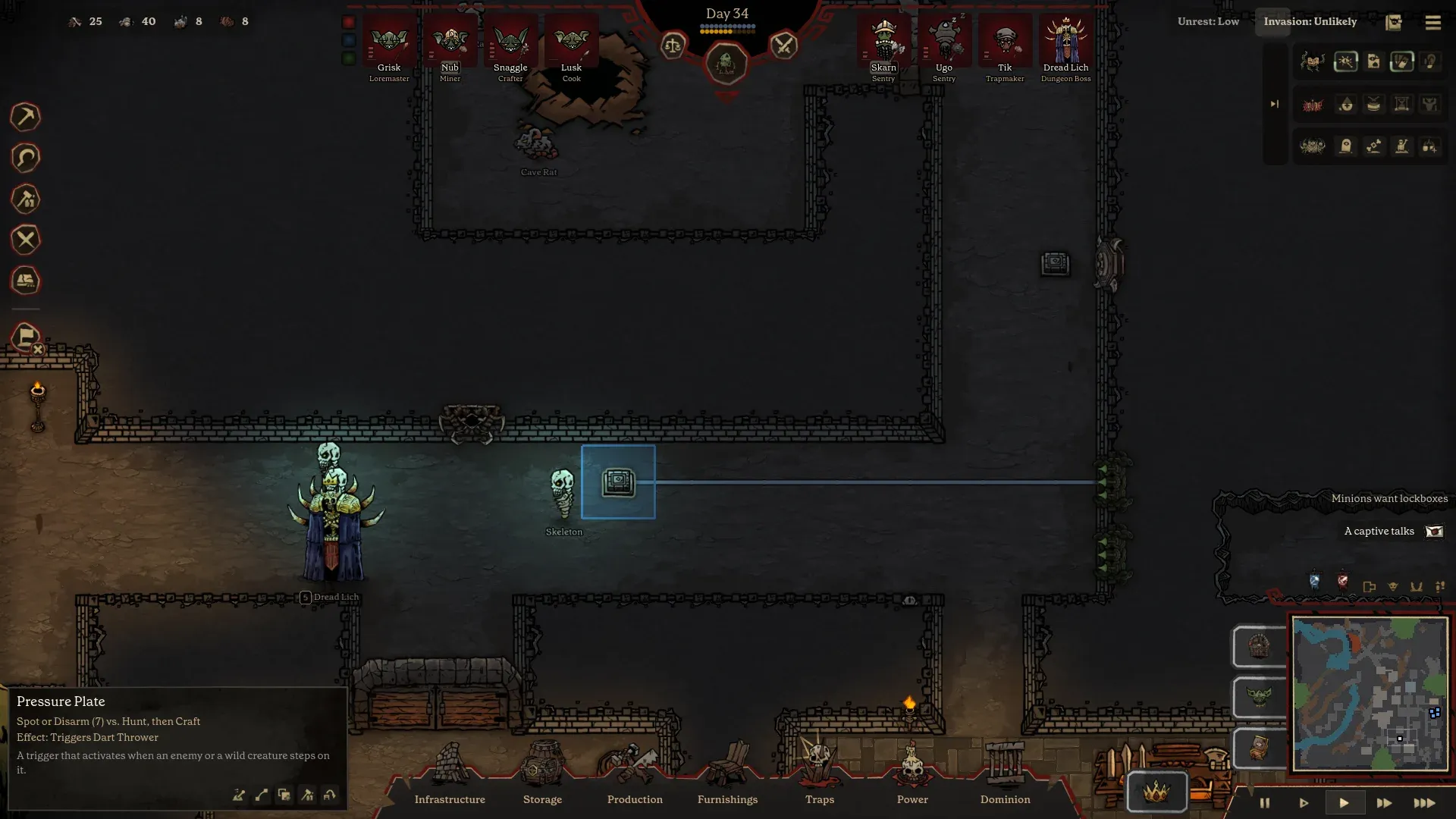
- A pressure plate wired to a Dart Thrower is shown in the official UI.
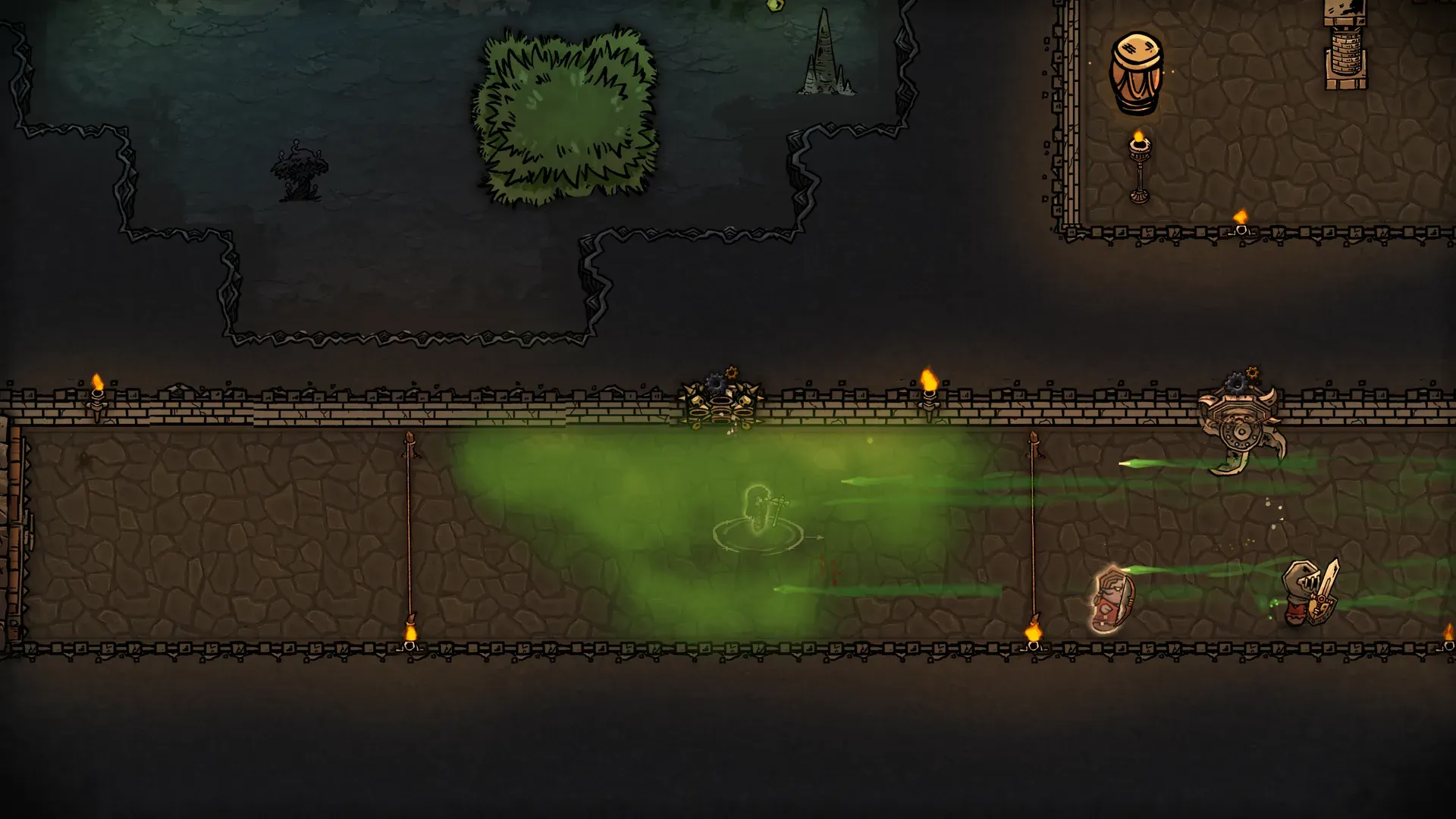
- Official screenshots show dart, gas, blade, flame and spider traps in action.
Not announced
- Damage, cooldown, range and reset values for every trap.
- Whether traps can harm your own minions, the Boss or tamed creatures.
- Exact trigger radius, line-of-sight rules and target filters.
- Whether wires can branch, chain or use logic gates.
- Whether adventurers can detect, disarm or avoid traps.
Trap mechanisms
The groups below are functional labels for planning, not official in-game categories. The “confirmed” column says what the public build menu or screenshot actually shows.
| Trap | Planning group | What is confirmed | Notes |
|---|---|---|---|
| Flame Sprayer | Damage | Visible in the official Traps build menu. | A fire trap. Damage, range, fuel and friendly-fire rules are not published. |
| Gas Sprayer | Area denial | Visible in the official Traps build menu and trap-corridor screenshots. | Fills a corridor with gas in official screenshots. Whether minions are affected is not stated. |
| Dart Thrower | Damage | Visible in the build menu; wired to a pressure plate in the official UI screenshot. | The clearest confirmed wiring example in the game: a pressure plate shows a wire to the Dart Thrower it fires. |
| Spinning Blades | Damage | Visible in the build menu and official combat screenshots. | A physical blade trap. Its damage, recharge and friendly-fire behavior are unpublished. |
| Electric Coil | Damage | Visible in the official Traps build menu. | An electrical trap. The store description separately names electric coils as a trap family. |
| Web Trap | Control | Visible in the official Traps build menu; webs are named in the Steam description. | A control trap. Slow duration, escape rules and whether it affects bosses are not published. |
| Blast Trap | Damage | Visible in the build menu and shown as a placement ghost in the official UI. | An explosive trap. Blast radius and self-damage rules are not published. |
| Alarm Trap | Utility | Visible in the official Traps build menu. | A non-damage utility trap. What it alerts, and whether it wakes minions, is not explained publicly. |
| Terror Trap | Utility | Visible in the official Traps build menu. | A fear-based utility trap. Its effect on adventurer morale is not documented. |
| Spider Trap | Summon | Visible in the build menu; an official screenshot shows it releasing spiders onto adventurers. | Releases a spider swarm from the wall. The number, duration and control rules are unpublished. |
Triggers
The trigger is the input side of the circuit. Mossbomb names five families, but the public material does not publish their ranges, filters or reset behavior.
| Trigger | Evidence | What it means for planning |
|---|---|---|
| Pressure plate | The official wiring screenshot selects a pressure plate in the Long Throat and shows a wire running to a Dart Thrower. | A floor trigger. Whether it is one-shot, repeatable, weighted or race-specific is not published. |
| Tripwire | Named in the Steam and Mossbomb feature lists as a trigger type. | A line trigger. Exact placement rules and detection rules are not public. |
| Sensor | Named in the Steam and Mossbomb feature lists as a trigger type. | A detection trigger. The sensor's range, target filters and line-of-sight rules are not documented. |
| Lever | Named in the Steam and Mossbomb feature lists as a trigger type. | A manual trigger. Who can pull it, and whether minions can be assigned to it, is not public. |
| Timer | Named in the Steam and Mossbomb feature lists as a trigger type. | A timed trigger. Interval settings and whether it can loop are not documented. |
Wiring in practice
The confirmed example is a pressure plate in the Long Throat wired to a Dart Thrower. That is enough to establish the basic grammar: trigger → wire → mechanism. It is not enough to establish branching, logic gates or multi-trigger circuits.
Input
Pressure plate
Wire
Link
Output
Dart Thrower
Do not assume a wire is free
The official UI shows wires running through the dungeon, but does not explain pathing limits, cost, power requirements or whether wires can be hidden. Build a small test circuit first and watch how the wire routes before committing a whole corridor.
Defense principles
Build the corridor before the ornament
A trap only works if adventurers are made to walk through it. The official screenshots show a narrow trap corridor with gas and darts, not isolated traps in open rooms. Start with one approach you can control, then layer the mechanisms along it.
Use a trigger you can reason about
Pressure plates and tripwires are positional; sensors are detection-based; levers are manual; timers are rhythmic. The public material does not give ranges or cooldowns, so test one trigger type at a time and watch where the wire actually fires.
Separate damage from disruption
The confirmed toolbox includes direct damage (darts, blades, flame, gas, electric, blast), control (webs), summons (spiders), and utility (alarm, terror). A corridor that only deals damage can still be walked through by a tough party. Mix a hold effect with a damage trap so the party spends longer inside the kill zone.
Keep a manual reserve
Minions and the Boss are not replaced by traps. The official material presents traps as one layer of defense alongside minions, doors and the throne room. Keep a response force behind the corridor so a party that survives the wire still meets bodies.
Check your own traffic
Minions haul, dig and patrol through the same halls. Nothing in the public material says your traps are safe for your own creatures. Plan a service route around the kill corridor, or be ready to test the friendly-fire rules before trusting a fully automated hall.
For a concrete first build, see the trap defense guide. For a spatial plan, use the dungeon planner and paint the kill corridor before the rest of the rooms.
What is not documented
- The actual damage, cooldown and range of each trap.
- Friendly-fire rules for minions, the Boss and tamed creatures.
- Whether traps need power, ammunition or maintenance.
- How sensors select targets and whether they can ignore your own minions.
- Whether wires can branch or combine triggers.
- How adventurer classes interact with traps — detection, disarming or resistance.
Sources
Sources for this page
- 01Malignus on Steam — Valve / Mossbomb
Store description, Early Access Q&A, tags, supported languages, features, system requirements and the storefront's November 12, 2026 date display.
- 02Mossbomb — the studio making Malignus — Mossbomb
Developer site. Confirms the November 13, 2026 Early Access date, $19.99 Early Access price, $29.99 planned 1.0 price, monthly updates, demo status, platforms, co-op and headline features.
- 03Malignus press kit and fact sheet — Mossbomb
Fact sheet, development history, feature list, character and creature art, screenshot captions, and permission for press and content creators to use the kit's media in coverage of Malignus.
- 04Official Malignus interface screenshots — Mossbomb
The press kit's 'Screenshots with the interface' set documents the New Dungeon flow, boss select, minion stats, duties, grumbles, behavior settings, trap build menu, wiring, Dark Arts, boss upgrades, prisoners, altar and overworld map. Used for observations that are not spelled out in the store copy.
- 05Malignus — Demo Launch Trailer (2026) — Mossbomb
Official trailer used only for visual observations such as the Cinder Demon's fire effects and the Sunken Horror's tentacles.
Accessed 1 November 2026. Full source log and verification notes: Malignus Wiki sources.